
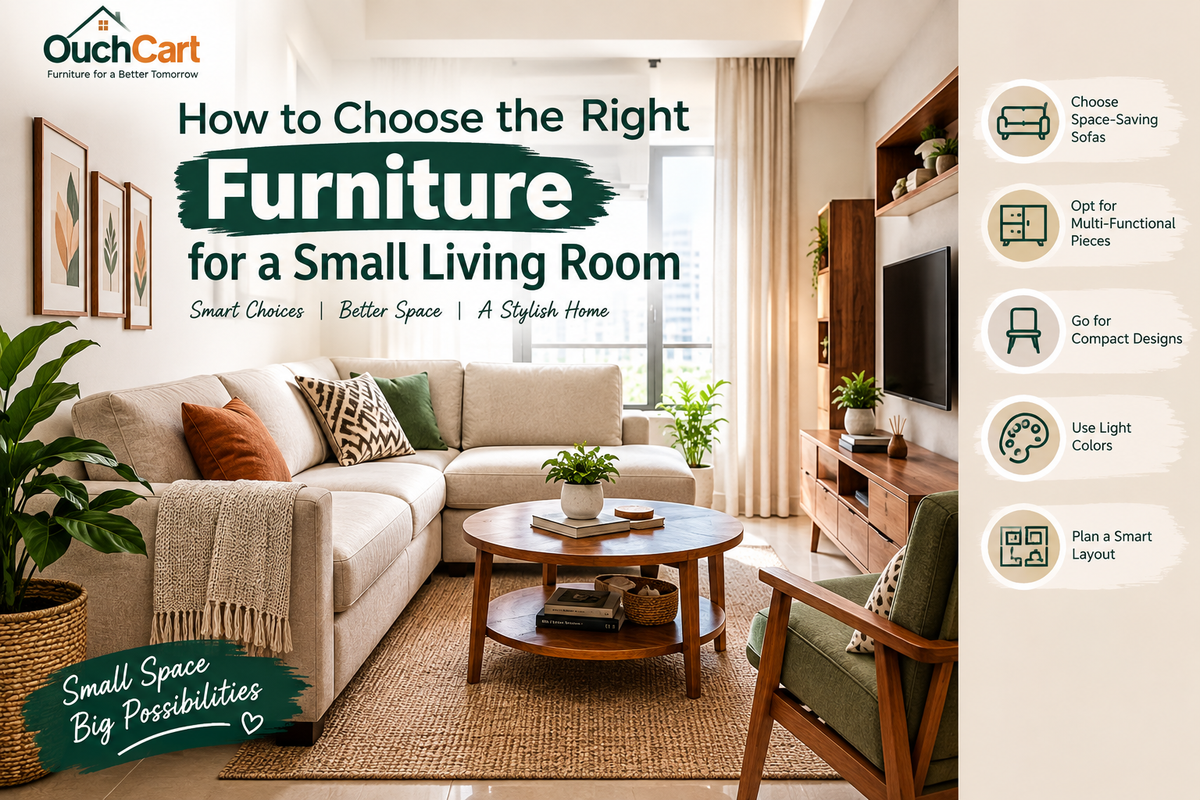
A small living room can still be comfortable, stylish, and useful. The main challenge is choosing furniture that fits the available space without making the room feel crowded.
In many Indian homes and apartments, living rooms are not very large. A large sofa, bulky table, or oversized TV unit can quickly take up most of the floor space. The right furniture can make a small room feel more open while still giving you enough seating and storage.
If you are planning to buy furniture for a small living room, this guide will help you choose the right pieces.
1. Measure Your Living Room First
Before buying furniture, measure your room carefully.
Do not depend only on how a sofa or table looks in a product photo. A piece may look compact online but take up more space than expected once it is placed in your room.
Measure:
- Room length and width
- Door and window positions
- Available wall space
- Distance between walls
- Entrance and passage areas
- Space required for opening doors
Also measure the entrance, staircase, lift, and doorway if you are buying large furniture. This can help avoid delivery problems later.
2. Choose a Sofa According to the Room Size
The sofa is usually the largest piece of furniture in a living room, so it should be your first consideration.
For a small room, avoid choosing a sofa simply because it has more seats. Instead, look for a design that provides enough seating without taking up unnecessary floor space.
Some practical options include:
- 2-seater sofas
- Compact 3-seater sofas
- Loveseats
- Sofa and chair combinations
- Compact sectional sofas
A sofa with a simple shape and raised legs can also make the floor underneath more visible, which can help the room feel less crowded.
3. Avoid Oversized Furniture
Large furniture can quickly make a small living room uncomfortable.
Deep sofas, very wide armchairs, large coffee tables, and bulky TV units can reduce walking space.
Before buying, check both the width and depth of the furniture.
For example, a sofa with a normal width may still take up too much space if it is very deep.
Always compare the product dimensions with your room measurements.
4. Keep Enough Walking Space
Furniture should not block the natural movement around your living room.
Leave enough space between:
- Sofa and coffee table
- Sofa and wall
- TV unit and seating
- Furniture and entrance
- Different seating areas
You do not need to fill every empty corner with furniture. Open floor space is useful in a small room and can make everyday movement easier.
5. Consider a Compact Coffee Table
A coffee table can be useful, but it does not need to be large.
For a small living room, consider:
- Small round coffee tables
- Nesting tables
- Compact rectangular tables
- Side tables
Round tables can work well where there are several walking paths because they do not have sharp corners.
Nesting tables are another practical option because the smaller table can be moved when needed.
6. Use Furniture With Storage
When space is limited, furniture that offers additional storage can be useful.
Instead of adding separate storage cabinets, you can look for furniture that serves more than one purpose.
Examples include:
- Storage coffee tables
- TV units with cabinets
- Ottomans with storage
- Sofa beds
- Storage benches
- Side tables with drawers
This approach can help keep everyday items organised without filling the room with extra furniture.
7. Choose a TV Unit Carefully
A TV unit can take up a significant amount of wall and floor space.
For a small living room, a compact TV unit or wall-mounted setup can be a practical choice.
If you prefer a floor-standing TV unit, choose one with enough storage for your needs without being unnecessarily wide.
Avoid buying a large entertainment unit simply because the wall has extra space. Keep the overall room layout in mind.
8. Make Use of Corners
Corners are often unused in small living rooms.
Instead of leaving them empty, you can use suitable furniture such as:
- Corner shelves
- Small accent chairs
- Tall storage units
- Corner tables
- Floor lamps
However, avoid filling every corner. The goal is to use the available space without making the room feel full.
9. Consider Multi-Purpose Furniture
Multi-purpose furniture can be especially useful in small apartments.
A single piece can sometimes perform two or more functions.
For example:
- A sofa bed can work as seating during the day and a bed when needed.
- An ottoman can be used as seating and storage.
- A nesting table can provide extra table space when guests arrive.
- A storage bench can provide seating as well as storage.
This is particularly useful if your living room also needs to serve as a guest area or work space.
10. Choose the Right Shape of Furniture
The shape of furniture can affect how spacious a room feels.
Furniture with clean lines and simple designs usually takes up less visual space than heavily detailed or bulky furniture.
For small rooms, consider:
- Slim armrests
- Simple sofa frames
- Compact tables
- Open shelves
- Furniture with visible legs
This does not mean every piece has to look minimal. The important thing is to maintain enough open space around the furniture.
11. Use Vertical Space
When floor space is limited, look at your walls.
Vertical storage can provide useful space without taking up much floor area.
You can consider:
- Wall shelves
- Tall cabinets
- Floating shelves
- Wall-mounted storage
- Vertical display units
Use these areas for books, decor items, plants, and other small belongings.
12. Select Furniture Based on Your Family Size
Think about how many people normally use the living room.
If you live alone or with one other person, a compact two-seater sofa may be enough.
For a family, you may need additional seating. Instead of choosing one very large sofa, consider combining a compact sofa with one or two chairs.
This can make the seating arrangement more flexible.
13. Think About Natural Light
Natural light can make a small living room feel more open.
Try not to place tall or bulky furniture directly in front of windows.
Keep windows as open as possible so that natural light can enter the room.
Furniture with an open design can also help maintain a lighter feel.
14. Pick Furniture That Matches Your Lifestyle
The best furniture is not necessarily the smallest furniture. It should suit the way you actually use the room.
For example, if your family watches TV together every evening, comfortable seating should be a priority.
If you regularly have guests, consider flexible seating options.
If you work from your living room, a compact desk or multi-purpose table may be useful.
Think about your daily routine before choosing the furniture.
15. Do Not Buy Too Many Pieces
One of the most common mistakes in a small living room is trying to fit too much furniture into the available space.
You may not need:
- A large sofa set
- Two side tables
- A large coffee table
- A big TV unit
- Multiple chairs
- Extra cabinets
Start with the furniture you actually need. Add additional pieces only if there is enough space.
A simple room with fewer useful pieces can be more comfortable than a room filled with furniture.
16. Choose Durable Materials
Small living rooms are often used every day, so furniture should be able to handle regular use.
When buying a sofa, table, chair, or TV unit, check:
- Frame quality
- Material
- Joints
- Surface finish
- Cushion quality
- Weight capacity
- Maintenance requirements
For wooden furniture, ask about the type of wood or board used and how it should be maintained.
Good construction is more important than simply choosing furniture because it looks attractive.
17. Check Furniture Dimensions Before Ordering Online
If you are buying furniture online, always read the dimensions listed on the product page.
Check:
Width: Will it fit between the walls?
Depth: Will there still be enough walking space?
Height: Will it block windows or other furniture?
Door clearance: Can the furniture enter your home?
Take these measurements before placing your order.
Small Living Room Furniture Ideas
Here are some combinations that can work well depending on the size and layout of your room:
| Living Room Size | Furniture Combination |
|---|---|
| Very Small | 2-seater sofa + compact side table |
| Small | 2/3-seater sofa + small coffee table |
| Small Family Room | Compact sofa + accent chair + nesting table |
| Small Apartment | Sofa bed + storage table |
| Long Narrow Room | Compact sofa + slim coffee table + wall-mounted TV |
| Small Room With Storage Needs | Sofa + storage ottoman + compact TV unit |
These are general ideas. Your room's exact measurements and layout should determine the final arrangement.
Common Mistakes to Avoid
Buying Furniture Without Measuring
Always measure the room before buying.
Choosing Furniture Only by Appearance
A beautiful sofa is not useful if it blocks the entrance or leaves no walking space.
Filling Every Empty Corner
Empty space is not always wasted space. It can make movement easier and the room more comfortable.
Ignoring Furniture Depth
People often check the width but forget about depth. A deep sofa can take up a lot of floor space.
Buying a Large Furniture Set
You may not need every piece included in a complete living room set. Choose only what fits your needs.
Forgetting Storage
Small rooms can become cluttered quickly. Furniture with built-in storage can help keep things organised.
Final Thoughts
Choosing furniture for a small living room is mainly about finding the right balance between comfort, size, storage, and open space.
Start by measuring your room. Choose the sofa carefully because it usually takes up the most space. Then add a compact coffee table, suitable seating, and storage according to your needs.
Do not try to fill every part of the room. Leave enough space for people to move comfortably and keep the layout simple.
With the right furniture choices, even a small living room can become a comfortable and practical part of your home.